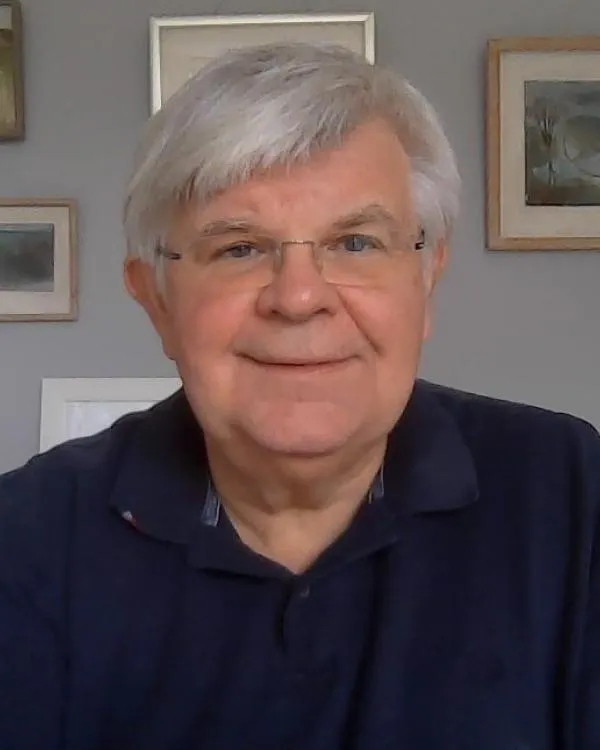
The Orpington Circle welcomed David Howarth, former Liberal Democrat MP for Cambridge and Professor of Law and Public Policy at Cambridge, to introduce his book Being Liberal. The evening covered what makes the liberal disposition distinctive, what liberalism would look like if it took that disposition seriously, and the party’s identity today.
David’s sources
David explained that he had drawn on a wide range of sources about what it means to be a liberal. Memoirs were of limited use. He joked that Paddy Ashdown’s diaries were “wholly unreliable”, since autobiographies are written to leave a positive impression. More useful was a small 1996 collection, edited by Duncan Brack, in which many people wrote essays on why they were liberals. He also read party policy papers, which he said are very well intended but rarely read. He organised all of this by theme to understand the emotional and mental habits of liberalism.
Seven liberal traits
David set out seven traits. First, liberals are open to new ideas and new ways of living. Second, they hate the abuse of power. Their gut instinct is to hate bullies and people who use power for their own ends, and beyond that, to hate cruelty. Third, they are non-judgemental about other people’s ways of living, in their relationships and in communities. He said this is one reason liberals find libertarians problematic.
Fourth, liberals treat people as individuals rather than as members of a class or group, and dislike being told where they belong. He saw this as common ground between the SDP and the Liberals, who both rejected class politics.
Fifth, liberals are anti-hierarchical, which is the basis of their belief in democracy. It means neither condescending nor deferring. Sixth is “liberal coolness”, a phrase from a remark by John Maynard Keynes about Asquith. It means rationality and a cool head: following the evidence, and thinking rather than reacting. Seventh is a disposition towards moderation and compromise, a theme that recurs again and again but can be a threat to liberalism and the Liberal Democrats.
What non-liberals look like
The book also describes the opposite disposition: deferential to power, stern and prescriptive, collectivist, hierarchical, emotional and irrational, and holding firm convictions.
Creativity against cruelty
The book ends by asking what liberalism would look like if it took these principles seriously. David argued that liberals favour human creativity and always try to promote it, and that the worst thing is cruelty. No future state of the world will be perfect and nothing is ever finished. The struggle between creativity and cruelty is always there.
The other parties
On whether other parties struggle with their identity, David argued that Labour’s roots in class war and the trade unions are no longer as relevant, and that it has become a party of the middle classes. The Conservatives were very pragmatic in the 1950s and once held a wide range of positions. Now, he said, they take a very narrow ideological view and are in a terrible state. He described Reform as a right-wing nationalist party, and said the Greens have moved from being a party of the environment to a party of the left.
“Strength without cruelty”
On the Liberal Democrats’ own identity, David urged the party to focus on what its members have in common, saying political problems cannot be solved through definitions. The party’s tactics, whether local populism, moderate conservatism or “anyone but the others”, confuse even liberals themselves, although the party is very good at politics.
He argued that we live in an anti-liberal age. Many people are conventional and not open to new ways of living. Social media pushes people to categorise one another, the BBC classifies people too, and a hierarchy of wealth runs through everything. Liberals, he said, do not come across as cruel, so they do not come across as strong. He cited Carl Schmitt’s view that all politics rests on friends and enemies. Liberals are generally disinclined to find enemies, he said, but Mark Carney has found one in Donald Trump. He also invoked Benedetto Croce’s resistance to the downward pressure on people to conform. His conclusion was that the Liberal Democrats need to project strength without projecting cruelty.